Sunday, March 2, 2014

The Minnesota Schoolyard Gardens Conference

This past Friday I had the amazing opportunity to attend the Minnesota Schoolyard Gardens Conference at the Minnesota Landscape Arboretum. I was even more lucky to have my attendance paid for by my university department. The whole conference was incredibly eye-opening to me because until now I haven't really been terribly sure where I want to go with my degree. Hearing all the speakers and connecting with people in the field that is schoolyard garden education has given me a better focus on what I might be able to do for a career. I've always known that educating people about growing their own food and helping them learn about how to care for the earth was something I wanted to pursue. Now I'm not only affirmed in that, but I have been given more of a direction towards what I might be able to do specifically.

The day started out in the largest hall in the Arboretum where, from 8:30 to 11:30, all of the attendees listened to a few short speeches (two of which were given by the heads of the State Department of Agriculture and the State Department of Education) and the keynote speaker, John Fisher of Life Lab. He not only had some amazing stories about what that organization had accomplished, but also really drove home why we need to reconnect kids to where their food comes from. Kids who grow their own food are much more likely to eat that food. Doesn't matter if it's strawberries or arugula. Kids who garden also have a much better understanding of nutrition which is incredibly important in a country where 17% of youth are obese. Gardens also introduce curiosity into their classes which, in turn, fuel the 4 C's: Creativity, Critical Thinking, Communication and Collaboration. After John Fisher, a young entrepreneur from the Twin Cities, Immanuel Jones spoke about his venture, Eco City. It was incredibly inspiring for me to see someone my age going out and starting a movement to get kids in not the best area of town back to the earth and growing food for themselves and their families.

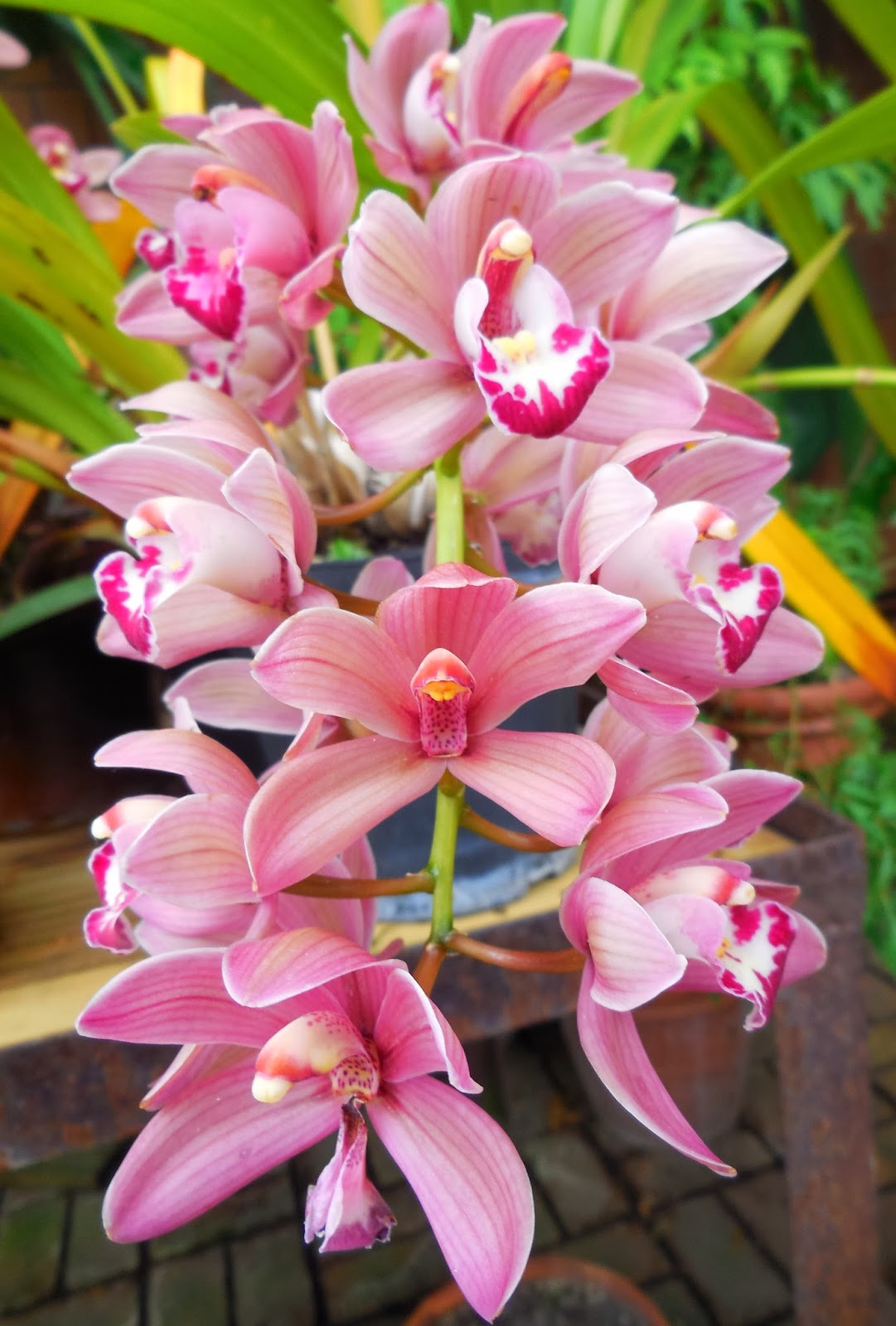
After the first half of the conference was over, we broke for lunch. This was a great time to sit down and discuss the opening speakers with my classmates and explore the Arboretum visitor center a little more. A few rooms were reserved for organizations and schools that set up tables and presentations so we browsed those and got some awesome free stuff along the way. Some seed catalogs, a gorgeously bound copy of the Minnesota Agriculture in the Classroom School Gardening curriculum, free zuchetta seeds, and some promotional material. I also explored their little glass conservatory where tons of orchids were in bloom. I've included my pictures at the end of the post.

See more below!!
The rest of the afternoon was organized into three sessions where you could choose which talk you wanted to attend. The first presentation I went to was by the garden educator for the Columbia Heights School District. She talked about you can literally teach everything with a garden. Math, English, sciences of course and social studies in a garden in very creative ways. The second session was partially presented by Midwest Food Connection and was part presentation, part brainstorming session about how you can incorporate diversity and culture into a school garden. Both of these presentations were incredibly eye-opening to me because it shows how creative you can get with a school garden and still teach to the graduations standards of your home state.

I also met some really incredible people from all over the state and country. Emily Kitchen from Cornell University connected me to an awesome group of people who've organized themselves into the group Emergent on Facebook. The garden educator from Columbia Heights really gave me a good idea of what I might have to do to with my education to get into a field like this (can you say teaching license and Master Gardener certification?).
If you're interested in learning more about school gardens, look up your local school districts and see if they're doing projects to get gardens into their schools and districts and if they need help doing so. In the meantime, enjoy my pictures from the arboretum.


One of my favorites: The Happy Dancer orchid.


The main lobby of the arboretum visitor center.
Fairy gardens!

Thursday, February 6, 2014

New Semester, New Classes!

Hello all! Apologies for being quiet on the blog front lately, but the beginning of the semester has kept me with very little free time for blogging. (Pro tip: Follow me on Twitter, I'm much more active there in busy times than on my blog!) But now that I have a quieter night to myself, I get to sit down and attempt to capture your interest with the new classes I'm taking.
First up, we have Successful School Gardens. If you saw my last post, you'll know that I'm traveling to England over spring break in March to learn about and teach in schools there with school gardens. This class runs for the whole semester, so we'll be preparing for our trip, as well as writing the lesson plans for teaching a class to students in multiple schools there. After we come back from London, we'll be paired up with schools here in the Twin Cities and will be teaching lessons about apples and microgreens to K-12 students. All the schools we will be paired with have existing school garden programs so we can learn how they work as well. I don't have too much to report on this since I've only been to the class once. It only meets once per week and the first class got cancelled due to extreme cold. (Don't even get me started on how cold it's been in Minnesota this winter!) This class also has a blog so I'll post links to those updates when they start rolling in.
Next up is Organic Farm Management. This is a class that really ties together a lot of things I find interesting. The first thing is, obviously, food. We're learning how to best grow good food in the climate we live in. The second thing, is organic farming. This class works specifically with the "Cornercopia" Student Organic Farm on campus to help them start a lot of the produce that they raise and sell over the course of the summer. Expect a lot of pictures from this class once we start growing all of those.

Embedded image permalink
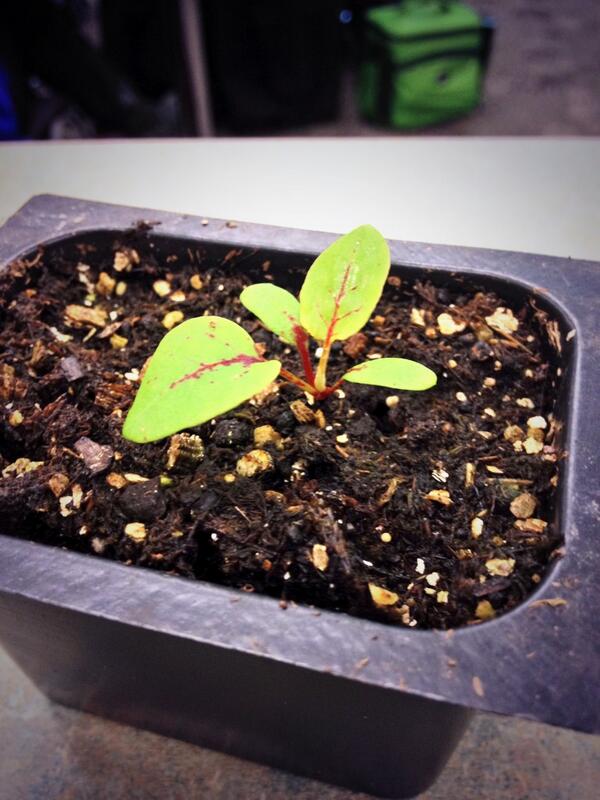
One of the seedlings from our seedling identification lab. Hard to tell it's an eggplant when it's that small!
Plant Physiology is the most lab intensive courses out of everything I'm taking. The course is actually classified as a "Writing Intensive" course (we need a certain number of these in order to graduate) so a lot of emphasis is put on scientific writing for lab reports. Most of our lab work is focused on environmental effects on crops such as amount of light, nutrient deficiencies, heat/cold, and how all of this affects the plant's growth. We've got a lab going right now testing germination and growth of plants with 16 hours of sun, 8 hours of sun and zero hours of sun. Pretty easy to tell what's going to happen, but the results are interesting to watch nonetheless.
Last but not least is "Sustainable People, Sustainable Planet". This is the only non-Horticulture class that I'm taking this semester and I LOVE it. We talk and read about sustainability as it relates to all different parts of life. Social justice, economy, environment, food systems, you name it. We've only been in class for around three weeks and I've already learned so much. My next post is probably going to be a bunch of stuff I've learned so far that I think everyone should be aware of. Our readings are incredibly interesting as well, so I'll definitely start posting links to those on here and on my Twitter account for you all to check out. Most are very accessible and thought-provoking reads. One big thing we started out looking at is planetary boundaries. I've included a diagram below. It's pretty self-explanatory, but basically the outer ring is the ceiling of where we should keep ourselves to stay within the Earth's resources and the inner ring is the floor that we should be above in terms of poverty, individual rights, education, etc.


Then this is where we are in terms of the inner circle. This means we're below where we should be when it comes to these things.


And then this is where we are in terms of the outer circle (the planetary boundaries) for things related to the environment and our impact on it.

Raworth climate doughnut

Quite the difference, huh? This class has definitely put a lot of things in perspective for me. There's a lot I still have to learn about sustainability, but I really hope after this class I know how to communicate these ideas to people better so we can all work together to help change the way we interact with the natural world.
And that's all folks! You'll likely see more class related blog posts coming soon, and in the meantime don't forget to follow me on Twitter and Pinterest to keep up with my day to day activities and see what interesting things I've found around the web!


Saturday, January 18, 2014

Study Abroad: Drum Roll Please!

I said I'd tell you guys where I was going abroad this March at the end of the week. So here it is!
Drum roll...


Yup, I'm going to England. I'll be in London for nine days in March studying K-12 school gardens! The class itself runs for the whole semester and the point of the trip is to learn techniques for teaching horticulture in schools so that, when we come back to the Twin Cities, we can bring those techniques to classrooms here. I'm really excited to have the opportunity to go abroad to study something I love! 

Wednesday, January 15, 2014

Field Trips: Part 2

My Fruit Production course also required all of us to take a self-guided field trip of a fruit farm in the area. Luckily, one of my friends from band's family who owns Pleasant Valley Orchard near Taylors Falls, MN. My group of friends takes a trip every year to the orchard which is a UPick operation and has an onsite store and bakery. There's also a hiking trail and a hay ride as well that my friends had a lot of fun with.


My roommate and I got to talk to the owner of the orchard about his growing methods and just general information about the farm. What made the biggest impression on me is how much time and effort he devotes to monitoring and trapping insect pests in order to keep pesticide use at a minimum. The amount he knows about the different pests life cycles and monitors their progression across the state of Minnesota every season is really fascinating. It also sounds like it would save him a lot of time and money only having to use a spray, for example, right after the bugs have laid their eggs and the spray causes the eggs not to hatch. The farm isn't certified organic, but they do use mainly organic practices. They also sell apples right out of their onsite shop, as well as to local grocers, and the local school system.


I ended up picking a lot of Haralson apples for pie making. I'm not really a person who eats apples raw, but I love them in baked goods. I ended up making an awesome pie out of them!


This orchard is a lot of fun and I saw a lot of people enjoying the gorgeous fall day. There were lots of families with young children who loved that there were farm animals and hay to play in. I definitely recommend checking them out next fall for an outing with family and friends of any age. I'd also recommend checking out their blog for updates from the orchard.

Field Trips: Part 1

For two of my classes this past semester, my Fruit Production course and Horticultural Marketing course, I went on a number of field trips to places around the Twin Cities. These were really eye opening experiences because it showed a part of the wide array of careers available to those of us with a degree in Horticulture. From everything to farming, to greenhouse work, to wholesale, to managing and marketing, we got to see how professionals in our area utilize their love of plants. Because cramming everything into one post would make things rather long, I'll be splitting these field trips up into three posts.

I'm going to talk about my Fruit Production field trip first because, while we only went on one field trip as a class together, we visited three places in one day, making for a day-long jaunt around the outskirts of Minneapolis/St.Paul that was packed full of educational experiences.
The first place we visited on that chilly Saturday morning was the Bauer Berry Farm in Champlin, MN. The Bauers have been in operation since 1977 and operate mainly growing strawberries (their primary crop) and blueberries. They also devote a good portion of their property to growing sweet corn. Their stories about trying to keep the geese away were probably the funniest stories I heard all day. While trying to find ways to keep them away but not kill them, they found out that geese really don't like airsoft guns.  Another cool part about the Bauer's farm is that everything runs on solar energy. They even produce so much that they have an excess of energy that they sell back to the utility company! They also practice sustainable agricultural methods to keep their farm environmentally safe. Cover crops of rye are planted yearly to minimize soil erosion and provide a natural nitrogen source. Pesticides are only used when absolutely necessary and they determine this by monitoring their fields with the Integrated Pest Management system. Their operation is also UPick site so I highly recommend looking them up around strawberry season to see when you can go out, pick some delicious strawberries and support a local farm and business.

One of the Bauer's strawberry fields. 
Strawberry rows next to blueberry bushes.

The next place our journey took us was to an organic apple orchard west of the Twin Cities metro area. You'll have to forgive me because I don't remember the name of the operation. This orchard isn't UPick, but it does sell it's apples to local co-ops like The Wedge. This farm was also operating with organic methods and the owner is also dabbling in cider making with an onsite cider press. He also shares land with a local vegetable producer who also sells her produce to local co-ops. They have a great land sharing system going on that's a benefit to them both.


My favorite (non-horticulture related) part of this stop was the friendly barn cats who decided they'd better tag along on our tour of the orchard. One even rode on the shoulder of one of my classmates almost they entire time!

This guy certainly had some claws, but he was perfectly happy to ride along
on my classmates shoulder the whole time we were walking.
This little guy didn't care to much for being carried, but he walked along with us until
almost the very end when his attention was caught by something else off among the trees. 

The last stop of our day took us to Woodland Hill Winery, just west of Delano, MN. Growing in what used to be a cornfield, and utilizing a few gorgeous red barns that used to hold livestock, Woodland Hill Winery is becoming one of the best in Minnesota. They only use natural compounds and fertilizers and are committed to not using herbicides on their crops. They host tours, tastings and a wide variety of events, as well as being available for weddings and other private parties. One of the coolest parts of our visit was seeing where the fermentation and ageing process happens. I was most impressed by the fact that our host, the owner of the vineyard, made most of the piping/heating/cooling equipment that we saw himself! And of course there were barrels and barrels of wine sitting along the walls.


No trip to a vineyard would be complete without tasting, and their tasting room was a warm and welcoming place on a slightly rainy and chilly day.


I learned so much about the organic fruit production industry on this trip and I'm really glad we had a whole Saturday to go out to visit all these places!


Friday, January 3, 2014

Fruit Farm Project

For my fruit production class this past semester, our semester-long project was to plan out the design for a fruit farm. We had to find a site in Minnesota or any other adjacent state where we would set up the farm. The farm had to include a "mainstream" crop like apples or grapes and at least one crop that wasn't quite as common. I ended up making a fruit farm where I would grow grapes, raspberries and blackberries for commercial jams, preserves and other value added products. We also had to go through the process of looking at USDA soil maps, choosing the cultivars of fruit, and thinking through all the other small details like cover crops, marketing, organic practices and five year plans.
Below are snippets of my program so you can get an idea of what I came up with. I figured it would be easier to show you instead of describing it. The following isn't the whole thing, because the whole thing is 17 pages long and I don't want to bore you all to tears. And, of course, I'm not an expert farmer so if my theories about cover crops and five year planting plans are a bit weird, cut me a little slack, this is my first one.


So there you have it. Lots of tables and lists of information, and putting it together took a really really long time, but I'm pretty satisfied with the outcome. I didn't include some of the stuff about my marketing plan and a lot of the hefty list of cultivars I chose, among other things. But I figured this was a lot of reading as it is. If you have any questions about it, feel free to ask. Next up on my list of blog post is some of my field trip experiences which will be up sometime next week!

Sunday, December 29, 2013

It's Been Too Long

Hello all! I've returned from the busy-ness that was my fall semester and I know that, first of all, I must apologize for being gone for so long. I've accomplished a lot in the last couple of months and in my next few posts I hope I can share that with you.
Classes were, overall, very successful. I really enjoyed my Horticultural Marketing class and my Fruit Production class. We went on a lot of field trips for these so I'll be doing posts with the pictures and information from those. Also, in the Fruit Production class, we had a semester long project where we created a system plan for a fruit farm of our own creation. There were some parameters for where the farm was to be located and what we could choose to grow, but otherwise there was a lot of creative leeway with it that I really enjoyed. I'll be doing another post on that project and hopefully I can get it uploaded to the blog so you all can take a look at it.  I also had a Agricultural Biochemistry class and, while not really my cup of tea, was an interesting class in that it applied chemistry to plants more than my general chemistry class of my sophomore year. My last class was an online, general management course and there's not much that's noteworthy about that, so I won't even bother. But I ended the semester with a 3.8 GPA so that's pretty exciting.
Besides classes, I was pretty busy with my third year with the Minnesota Marching Band and pep band. That and work took up almost all of my spare time that I didn't devote to homework so, sadly, blogging fell to the bottom of the list. My marching band also traveled to Houston for the Texas Bowl on the 27th, so even my winter break up until now has been busy. If anyone wants to see our halftime show from the bowl game, here is a link to our video page. Enjoy!
My next few posts will cover some of my field trips for classes, the fruit farm project I completed and a few other things that aren't as garden specific. I'll also do a post about what I've got planned for the coming semester (hopefully more blog posts than this past semester).
Hope you're all still reading and having a wonderful holiday season!

My marching band on the field at Reliant Stadium for the 2013 Texas Bowl.