Showing posts with label flowers. Show all posts

Sunday, July 20, 2014

Plant a Pollinator Garden at Your Vacation Home!


Minnesota "cabin culture" as it has been called, is a normal part of life where I live. It's very common for a family to pack up for a long weekend at the cabin several times per summer, if not every weekend! In an article by CBS Minnesota, it's estimated that there are 122,000 "seasonal/recreational properties" in Minnesota alone. When you think about the Midwest (Wisconsin and Michigan also being popular places for people to own cabins) that's a lot of private property! Our family (primarily Minnesotans) own a cabin in Wisconsin, so this goes across state lines as well.


Sunset at the lake.

This weekend, as I was taking a much needed vacation to our family's cabin with my family and my boyfriend, I got to enjoy the wildlife, dense forests and lake views. Sitting on the deck, enjoying the mild weather we had over the weekend, I was also able to enjoy watching all the bees, butterflies and birds that visit the garden my grandmother has planted in front of the cabin. She has planted a lot of pollinator-friendly flowers and shrubs in a small strip along the front of the cabin that is not only nice to look at, but incredibly easy to maintain. We generally visit our cabin on weekends and for slightly longer vacations throughout the summer and into early fall. Sometimes, however, no one is there for weeks at a time, meaning that the garden is left on it's own. I know many others with cabins like ours have similar vacation patterns. But just because we leave doesn't mean the pollinators do! This got me thinking, what if all these cabins, vacation homes, camps, etc had a pollinator garden planted? That would be close to 122,000 pollinator gardens in Minnesota, plus however many seasonal properties you find in the rest of the Midwest!

The plot that entices our local pollinators.

It's fairly common knowledge that, currently, pollinators are struggling. Not only are pollinators at risk from chemicals now used in pesticides and herbicides, but they're also struggling because of climate change. It's important for us to do everything we can to help increase pollinator populations because, without them, our future will be pretty dire as well. Pollination by bees alone accounts for the survival of 30 percent of the world's food crops and 90 percent of our wild plants. Include pollinators such as butterflies and birds in that equation and the numbers get even higher.

If you have some empty yard space at your cabin or vacation home, here's a few things you can do:

Plant a Pollinator Garden
1. Plant native plants. Not only will these plants be better for your native pollinators, but they'll be easier to take care of. Native plants are better adapted to the climate you live in, so they won't need extra water or fertilizer and most are perennials so you won't have to replant year after year. Many native plants often also serve as larval host plants. 
2. If using non-native plants alongside natives, make sure to check with the grower that you're buying from that it's a low-maintenance plant that tolerates your local climate well.
2. Choose plants that have varying bloom times. That way, you don't have a bed of flowers that only bloom in the spring and then are useless to the pollinators for the rest of the season. It'll also ensure you have blooms every time you visit your cabin, whether it's June or August!
3. Choose plants with varying colors. Different pollinators are attracted to different colored flowers. This table from the North American Pollinator Protection Campaign is a simple way to plan which colors to add into your garden and also includes other characteristics that certain pollinators find appealing.
4. Plant in clumps. Keeping the plants together makes it easier for pollinators to buzz, fly or hop from one flower to the next.

The bee balm is one of the favorites.

AND it comes in many different colors!

Add Some Extra Resources
1. Adding a hummingbird feeder is a great way to attract these beneficial and entertaining birds to your property. Hummingbird feeders are sold at most hardware and home-improvement stores and sugar water is easy to make. Just remember: don't add red food coloring to the sugar water and clean out the feeder between fillings. Easiest way to do this at a cabin is to just clean it and fill it once per visit.
2. Leaving brush on your property in a brush pile is great for pollinators like bees that use places like that as nesting sites. It should be noted that bees that are nesting are not the same as bees building a hive. 
3. Create a bug hotel, to house the many beneficial insects that will frequent your garden.
4. Add some sort of decorative dish that can catch rainwater so pollinators can get a drink. Filling the dish with partially submerged pebbles and stones is also helpful to the smaller pollinators like butterflies and bees.

Pollinator water dish. (Photo: TC Daily Planet)

What to Avoid
1. Pesticides and herbicides. Honestly, why you would need to use these at a cabin or vacation home is beyond me. You're not going to be there most of the year anyway, so having less weeds is not going to have a huge impact on your life. If you need to handle a pest problem with pesticides, research which options would be the least harmful to pollinators and the environment. Many chemicals have been found or are thought to be harmful to pollinators, so just skip them if you can and pull out those couple weeds by hand if they're bothering you.
2. Modern hybrid flowers, especially those with double petals. These often are bred only for the blooms and have no pollen, nectar or fragrance.
3. Covering bare soil with landscape fabric. Many pollinators rely on the soil to dig nests, and others like those native weeds that poke up through your perennials. 

There are TONS of design plans for pollinator gardens out there, so go use that Google machine and start planning yours! 

For more resources about creating pollinator habitats, check out the links below!
Lady Bird Johnson Wildflower Center Native Plant Database (find native plants for your region!)
Pollinator Guides by Ecoregion (download a guide specific to your area!)
US Fish and Wildlife Service Pollinators Page (get educated!)
Pollinator Partnership (TONS of resources)

Saturday, July 5, 2014

World Cup Flowers


Scrolling through my Twitter feed this week, I couldn't help notice the Royal Horticultural Society's tweets about the national flowers of the countries participating in the world cup. They would ask their followers to "vote" on which team they wanted to win based on which flower they preferred, a much better way of doing things in my opinion because I often have no idea how to choose who to root for in soccer matches. I always get interested in our history with plants and how we come to choose flowers to represent different things, countries included, so I thought I'd dive into the history of the national plants for the four quarter-final teams and why they were chosen for their respective countries.

Brazil

Tecoma chrysostricha (left) and Cattleya labita (right)


According to sources that I found, Brazil seems to have two flowers it holds in national regard. The first, Tecoma chrysostricha is called the "National Flower Emblem" of Brazil. The second, Cattleya labita, is often called the "State Flower" of Brazil. Slightly confusing, but I guess the ust couldn't decide between the two. Tecoma chrysotricha, also known as Ipe-amarelo (caled so by the indigenous peoples of Brazil) is the flower of a native, broad-leafed tree that is found in the decidous forests of South America. It belongs to the tropical family of bignonias that has over four hundred species found in Brazil. It gained prominence when it was made the national flower emblem by President Quadros.
Cattleya labita, also known as the corsage orchid, is very popular in festivals in Brazil. It primarily grows in the northeastern part of Brazil where it was discovered in 1818. 


Germany


Centaurea cyanus, also known as the blue cornflower, is the national flower of Germany. It is thought that this is in part because of the story that Queen Louise of Prussia, who was fleeing Berlin pursued by Napoleon's forces, hid her children in a field of cornflowers and kept the quiet by weaving wreaths for them out of the flowers. It also became associated with Prussia because it was the same color as the Prussian military uniform. When Germany became a unified country in 1871, the blue cornflower symbol stayed. Other ties to German history include becoming a political symbol, with members of the Freedom Party wearing it at the opening of the Austrian parliament in 2005, and being the favorite flower of Kaiser Wilhelm.

Argentina


Erythrina cristina galli, also known as the ceibo or Cockspur Coral Tree, was declared the national tree and flower of Argentina on December 2nd, 1942. This species in the Fabaceae family usually grows in forests along waterways and in swamps and wetlands. The tallest varieites are found in the Argentine provinces of Salta, Jujuy and Tucuman.

Netherlands


The tulip is the obvious national flower of the Netherlands. Even though the tulip is not "official" (there hasn't been any decree of any sort to make it the national flower) it's the flower that the country is best known for. The Netherlands produces three billion tulip bulbs a year, making it the most prominent producer of tulip bulbs in the world. Tulips were first introduced into the Netherlands by Carolus Clusius in 1573. The tulips he planted at Leiden University began the infamous "tulip mania" where some single tulip bulbs were said to cost ten times the annual income of a skilled craftsman. Tulip mania ended when the tulip market crashed extraordinarily. In the Netherlands today, the tulip has come to symbolize the briefness of life and tulip festivals are held annually.

Sources:
http://www.brazil.org.za/national-symbols.html#.U7h63fldWSo
http://nationalflowers.info/2010/12/21/national-flower-brazil-cattleya-labiata/
http://en.wikipedia.org/wiki/Centaurea_cyanus
http://en.wikipedia.org/wiki/Erythrina_crista-galli
http://www.worldatlas.com/webimage/countrys/europe/netherlands/nlsymbols.htm
http://en.wikipedia.org/wiki/Tulip
http://en.wikipedia.org/wiki/Tulip_mania


Friday, January 11, 2013

Winter Break in Michigan

Now that I'm a little more than halfway through winter break, I've finally made it home to Michigan for the first time since August. The band trip to Houston kept me away until after New Years, and fall semester kept me so busy that I couldn't even spend a weekend at home. So it's certainly nice to be back for a two week break from campus and the Twin Cities.

Here's my band on the field in Houston before the bowl game! 
I'm one of the little gold dots in the "8"!

The best part about coming home is seeing all the plants my parents have. Almost every room in the house that gets some sort of light has greenery tucked in the corners. The front window that gets lots of southern sun in the winter has our largest tropical plant, gorgeous flowering African violets and a Christmas cactus just finishing up a cycle of blooms.


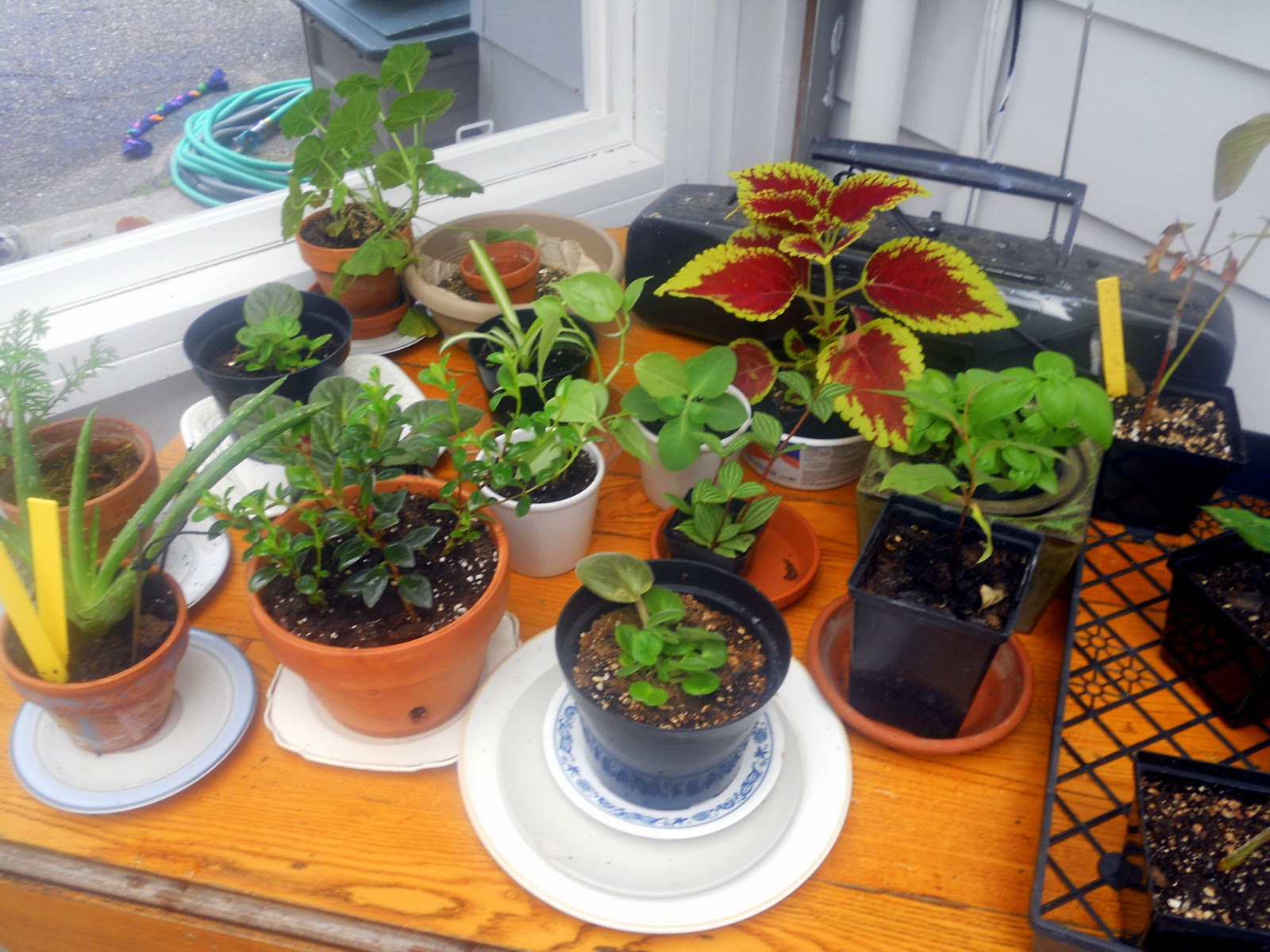
The kitchen is also full of mason jars full of cuttings of the coleus with lovely root systems starting. Some of these are the coleus plants I started in my plant propagation class last year that we had outside our house this summer. These cuttings will be able to go back out in the spring for another year of potted summer greenery.


Once I got back, I booked it (pun intended) straight to the library and checked out a big stack of horticulture and gardening books. A lot of my free time has since been spent reading and taking notes in the garden journal I've fashioned out of a barely used sketchbook. To keep this post from running too long, I'll have another post about making a garden journal later this week.


A few snippets and ideas I've found:
1. Freeze smaller, edible flowers or their petals in ice cubes to make a pretty, decorative addition to your summery drinks.
2. Use plastic take out containers to start seedlings in early spring. Since they already have a clear cover, you won't have to put a plastic bag over them. Be careful of plastics, however, and stay away from plastics 3, 6 and 7. You can find this number on the bottom of the container.
3. You can actually eat daylily buds before the flowers bloom. One book recommended sauteing them like peas!
4. Pinks can actually be infused in wine or vodka and some begonia petals can be eaten but are sour like lemons.

Some of my time has also been spent reading the book my younger sister got me for Christmas, "A Victorian Flower Dictionary" by Mandy Kirkby. It's a fascinating little book with pages of flowers and their meanings, often accompanied by little snippets of literature or poetry.


My discovery of the week, however, has been a really fun gardening program you can watch for free on Hulu.com. It's simply called "Organic Gardening" and it's a gardening and horticulture program out of Australia. Since it's such a different climate than the one many of us are living in up in the Northern Hemisphere, some of the things in the gardens down there might not work in our gardens and their seasons certainly are different than many of ours. But it's still very interesting from a horticultural perspective in learning about how gardening works in a different part of the world. And, of course, some of the gardening advice, such as how to prune apple trees and ways to fix common garden problems, are the same as anywhere else. You can find the program here if you'd like to check it out. Ever the multi-tasker, I've enjoyed watching it while writing in my garden journal and finding magazine cuttings to decorate it.

In my next post, I'll be talking more about the making of my garden journal (along with some rather fuzzy photos of the journal taken with my phone camera) and some ideas for getting your own started, if you don't have one already. 

Monday, July 9, 2012

Coming Home to Summer Flowers, Vegetables and Weeds...

Minnesota and Wisconsin, despite being incredibly hot and humid, made for a really awesome 4th of July trip. It was really great to see my friends and family again. First I went down to the Twin Cities and got to see all my college friends and march in a 4th of July parade (in the 100 degree weather). Then my family went to Wisconsin and stayed at our family's cabin for a few days, where we went tubing down the river near the cabin and floated around on the lake soaking up the sun.

My favorite skyline in the whole world.

The sunsets on the lake our cabin is on are awesome...

...like, really REALLY awesome. :)

So coming home after 9 days away I should've expected to find lots and lots of weeds. :P


I spent the early afternoon weeding out the bean patch that FINALLY has bean plants in it. Thankfully the weeds hadn't really taken a very good hold and were easy to pull out quickly.


The tomatoes have straw under them and didn't need as much weeding. They've gotten so much bigger than they used to be and most have little, green tomatoes.


The peppers are also off to a great start and two of them have peppers on them. They're not quite big enough to pick yet, but they're getting there, especially the green pepper.


Speaking of peppers, the grocery store peppers are doing really well. When I left, they were just seedlings, but I returned to healthy young plants. Hopefully I'll find room in the garden for all of them. It looks like my pea plants failed (which I'm rather sad about) but I'll probably use their bed for the little peppers.

 The peppers really took off while I was gone and now I just have to put them somewhere...

I had a few that got really big so I planted them in a bare spot in the garden right away. 

 On top of all this, I now have more basil than I know what to do with. Once it gets bigger, I'll probably start giving it away to friends who like to cook with it and try to find some recipes myself.

A clump of basil.

The flower garden is looking really nice as well. With all the heat we got over the past week, some of the flowers really popped.


I think these pink lilies are one of my favorite blooms right now.


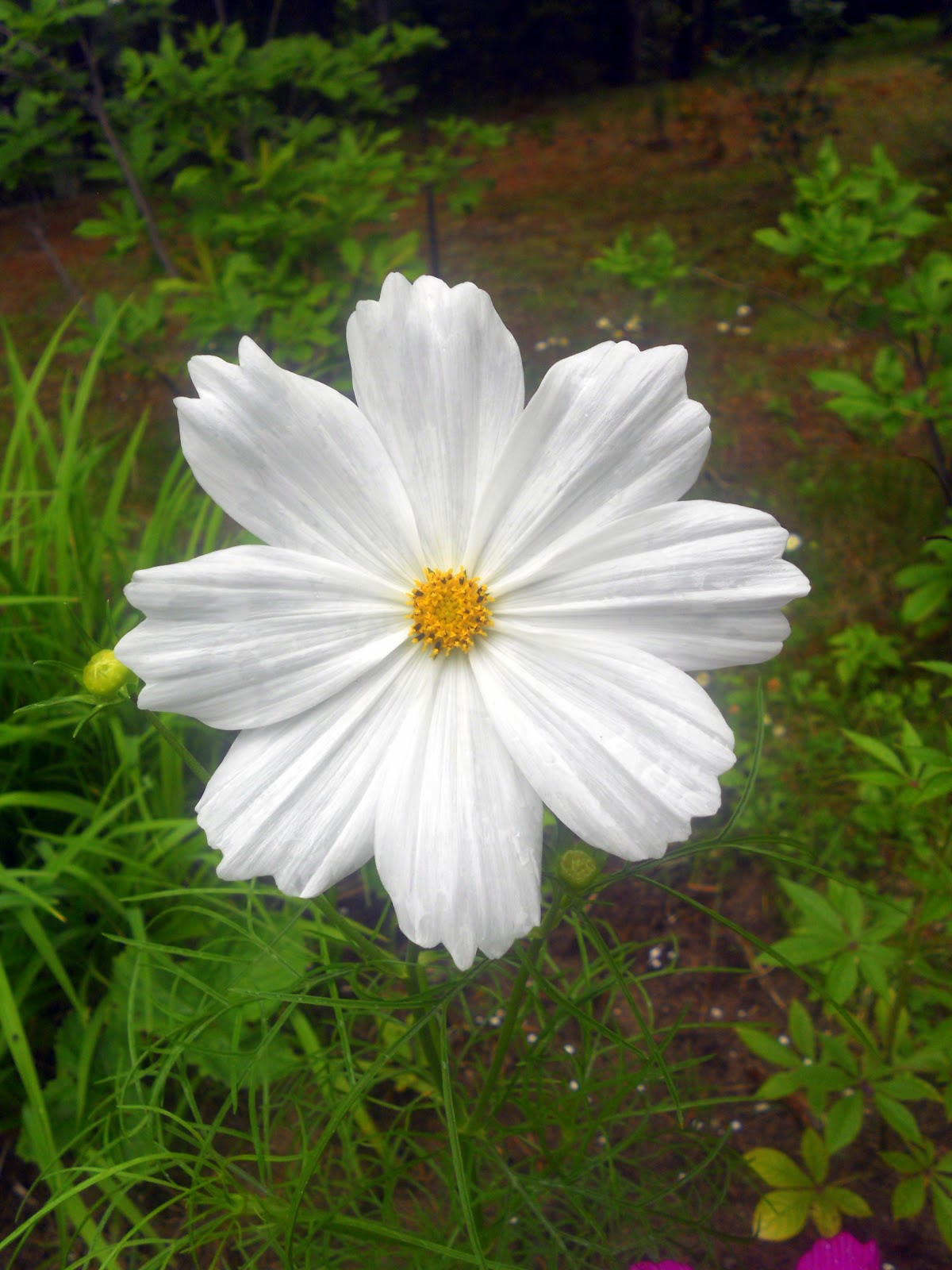
The cleome and cosmos came out while I was away and looks really nice under the front window and behind the house.

The morning glory has climbed all the way up the fence and will probably have to spread out horizontally now since there's no where else to go. 

 I really love this shade of peachy-pink.

The houseplants are still doing as well as ever. I was really excited when I got a text from my dad while in Minnesota with a picture of my hibiscus blooming. It has lots of buds on it and the heat of last week finally gave it the push it needed to start blooming. It'll probably get 3 or 4 more blooms judging by how many buds are still unopened.


The rest of the houseplants are still loving the three-seasons room.

My dad has come up with some pretty cool metal hooks for holding plants and sculptures for  the vines on the side of our house. The three seasons room has a few of his new creations like the one now holding my very first spider plant.

Most of his metalwork uses rings like these. Even the trellis in the front yard made of giant rings.

He's also made the trellises in our yard, one out in the front garden that holds the climbing honeysuckle and the other that frames the walkway to our side porch.

The trellis on our side porch that leads to the front yard. It's hard to see from this angle, but he created this one with two long rods of metal, connected by small rings.

 It was great to come home and see how much the garden had grown. Now that the weeding is over, I'll be trying my hand at some new recipes for the garden party I'm planning for my birthday this coming Thursday. :) I haven't done a food post yet and, despite the fact that this is a gardening blog, I feel like cooking and gardening go hand in hand.That, tea parties are always adorable to photograph. ...Yes, my friends and I still have tea parties. We've decided we're going to make awesome old ladies. Hopefully I won't be too busy and can take a few pictures.


Tuesday, April 10, 2012

The Language of Flowers

This is my second book post of the week, but while staying at my grandma's for the Easter weekend, I came upon this book on her shelf called "The Language of Flowers" (edited by Shelia Pickles).


It went through a number of common flowers and gave their meanings, why they mean what they do and a poem to go along with each one. I was, of course, intrigued by this little book. Flower symbolism has always interested me and I liked that it gave a history behind each one.
I'm sure each of these flowers has multiple meanings depending on which culture or text you reference, but these are meanings according to this book.

Amaryllis - Pride
Anemone - Forsaken
Bluebell - Constancy
Camellia - Perfected Loveliness
Carnation - Alas for my poor heart


Chrysanthemum - I love
Clematis - Mental Beauty
Columbine - Folly
Cornflower - Delicacy
Crown Imperial - Majesty and Power
Daffodil - Regard and Chivalry
Daisy - Innocence
Dandelion - Oracle
Forget-me-not - True Love
Fox Glove - Insincerity
Gentian - You're unjust
Geranium - Melancholy
Hollyhock - Female Ambition
Honeysuckle - Sweetness of Disposition
Hyacinth - Sorrow
Iris - Message
Ivy - Fidelity
Jasmine - Grace and Elegance
Lavender - Distrust
Lilac - First Emotions of Love
Lily - Purity
Lily of the Valley - Return of Happiness


Marigold - Grief
Narcissus - Egotism
Nasturtium - Patriotism
Orchid - A belle
Pansy - Thoughts
Peony - Shame and Bashfulness
Phlox - Agreement
Poppy - Fantastic Extravagance
Primrose - Early Youth
Rose - Love
    - White Rose - Purity and Spiritual Love
    - Yellow Rose - Decrease of Love and Infidelity
    - Cabbage Rose - Ambassador of Love
    - Musk Rose - Capricious Beauty
    - Single Rose - Simplicity


Speedwell -Female Fidelity
Sunflower - Haughtiness


Tulip - Declaration of Love
Violet - Modesty
Wallflower - Fidelity in Adversity
Water Lily - Purity of Heart

As you can see from the pictures, the art is gorgeous, incorporating many works of art from different artists that depict each flower. If I hadn't been so busy with spending time with my family, I could probably give a more thorough summary of why each flower means what it does, but Easter is always a busy time so I just had to jot down the meanings.

Tuesday, April 3, 2012

What's Blooming on Campus (Part 2!)

Hort Major Update: Went and talked to an adviser from the agricultural college (the college the horticulture major is in) today. At this point, I'm on my way to becoming a horticulture major. ...If I can survive the chemistry and math classes that is. :P

But anyway. On to the flowers!
My Tuesday classes take me to the St. Paul Campus (unofficially the agricultural campus) which has lots more blooming than the main campus near the cities. So I went a bit crazy before class taking pictures of all of them.

 One of the flowering trees. Not quite sure what it is since I was en route to class and didn't stop to take a good enough look. 

Yellow tulips in front of the Student Center!
 The two-color tulips are probably my favorite...

 ...and there was a huge patch of them!

 The yellow tulips are such a nice sight on a gloomy Tuesday like today. 

 More scilla blooming in the woods. :) 

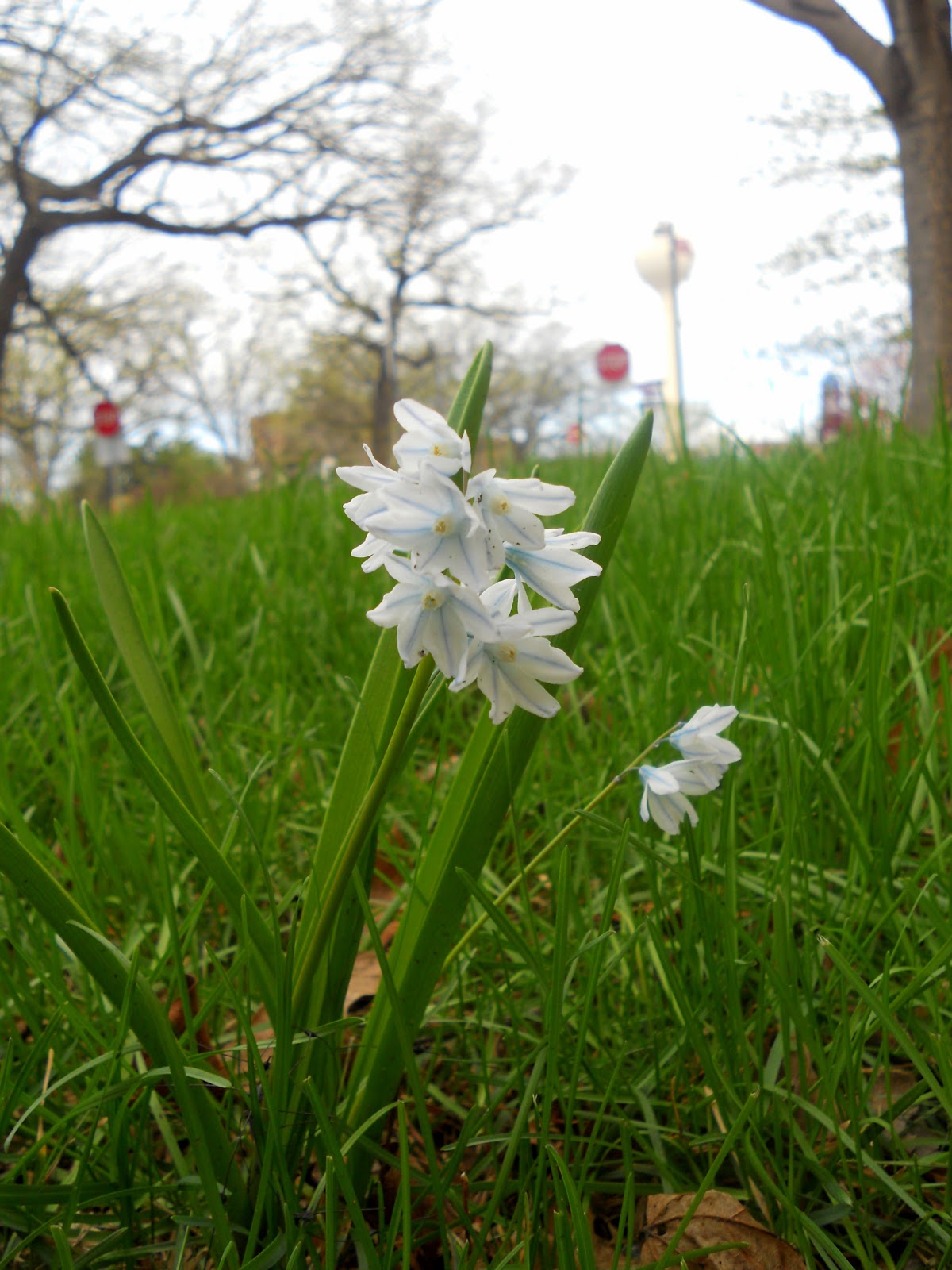
 Found some  puschkinia (what I thought was scilla until a reader pointed out what it really is. And it's related to scilla so no wonder I thought it was) blooming as well in front of one of the classroom buildings.

The color was just so delicate and lovely. I couldn't stop taking pictures.

Back on the main campus, a little church garden near my dorm building has a lot of things blooming. Notably is (if I've identified it properly) this redbud tree.


 I rather like the picture of this pretty flower with the University hospital towers looming in the background. 

 Hyacinths were blooming all over the garden too.